

Cell 29, Baihuayuan, Panzhuang, Zhangdian, Zibo, Shandong, China
Views: 0 Author: Site Editor Publish Time: 2026-03-24 Origin: Site


Landwind engine parts are the heart of your vehicle, driving performance, efficiency, and reliability. Understanding these components helps beginners, car owners, and mechanics make smarter maintenance and repair decisions. From pistons and crankshafts to camshafts and valves, every part has a role in generating power. This guide explains how Landwind engines work, highlights common engine parts, and shows how to select the right components for models like X5, X6, X8, and X9. By learning these basics, you’ll feel confident managing engine care and choosing genuine spare parts.
LANDWIND engine parts are the essential components that allow a vehicle to operate smoothly. They work together to convert fuel into mechanical power, which ultimately drives the wheels. Some of these parts are located inside the engine, such as pistons and crankshafts, while others support the system externally, like filters and pumps.
Pistons move up and down inside cylinders to generate power
Crankshafts convert that motion into rotation
Valves control airflow entering and leaving the engine
Fuel injectors deliver precise amounts of fuel
Oil pumps circulate lubrication to reduce wear
Each part has a specific function, and even a small failure can affect the entire engine system.
If you’re just starting to learn about cars, engine parts may seem complex. However, understanding the basics can make a big difference in how you maintain your vehicle and make purchasing decisions. It helps you identify potential problems early and avoid unnecessary expenses. You also gain more confidence when choosing spare parts or discussing repairs with a mechanic.
Avoid low-quality or incompatible parts
Understand how your engine performs under different conditions
Make informed maintenance and repair decisions
Reduce the risk of major engine damage
When you know how these components function, you gain better control over your vehicle’s performance and longevity.
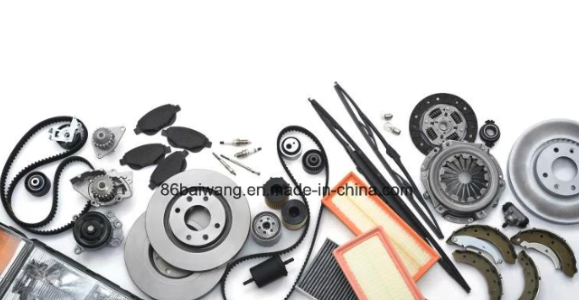
A LANDWIND engine runs on a process called internal combustion. It burns fuel inside small chambers, then turns that energy into motion. We don’t see it happening, but it repeats thousands of times every minute. Inside the engine, fuel mixes with air. Then it gets compressed, ignited, and released. This cycle creates force. That force pushes parts into motion, which eventually turns the wheels.
The process happens in four main steps. Each step must occur in the right order, or the engine won’t run properly.
At this stage, the engine pulls air into the cylinder. It mixes air and fuel in the right ratio. Clean airflow is important, so filters play a big role here.
Next, the piston moves upward and compresses the mixture. This step increases pressure and temperature. It prepares the mixture for ignition.
A spark ignites the compressed mixture. This creates a small explosion inside the cylinder. The force pushes the piston downward.
After combustion, gases need to leave the engine. Exhaust valves open, and the gases move out through the exhaust system.
| Stage | What Happens | Key Parts Involved |
|---|---|---|
| Air Intake | Air and fuel enter the cylinder | Air filter, intake valve |
| Compression | Mixture gets compressed | Piston, cylinder |
| Combustion | Fuel ignites and creates force | Spark plug, piston |
| Exhaust | Gases exit the engine | Exhaust valve, manifold |
Every engine part plays a role in this process. Pistons move up and down. Crankshafts turn that motion into rotation. Camshafts control valve timing, so air and gas flow correctly. We can think of it like a team. If one part fails, the whole system struggles. For example, a weak spark plug reduces combustion efficiency. A worn piston affects compression. Parts must stay synchronized. Timing belts or chains help keep everything aligned. When they work properly, the engine runs smoothly and delivers steady power.
Engine efficiency depends heavily on part quality. High-quality components perform better under stress, lasting longer and reducing the risk of failure. Low-quality parts, on the other hand, can lead to poor fuel combustion, increased engine wear, overheating issues, and a noticeable loss of power. By using reliable components, the engine runs cleaner and stronger, improving fuel economy and lowering overall maintenance costs.
Understanding the core engine components is key for any beginner. These parts form the heart of the engine, generating and transferring power efficiently.
Pistons
Pistons move up and down inside the cylinder. They compress the air-fuel mixture and transfer combustion force to the crankshaft. Watch for signs of wear like scoring or unusual noise. Regular inspection and timely replacement maintain engine performance.
Crankshaft
The crankshaft converts the pistons’ linear motion into rotational motion. It drives the transmission and ultimately moves the wheels. Its balance and condition are critical for smooth engine operation.
Connecting Rod
This rod links each piston to the crankshaft. It transfers energy efficiently and must remain strong to prevent engine failure.
Cylinder Block & Cylinder Head
The cylinder block houses the pistons, crankshaft, and coolant passages. The cylinder head seals the top of the cylinders and contains valves. Together, they provide the engine’s structural foundation.
The valve train ensures air and exhaust flow precisely. It also affects power and efficiency.
Camshaft
Controls opening and closing of valves. Timing impacts both performance and fuel efficiency.
Intake & Exhaust Valves
Intake valves allow air-fuel mixture in, exhaust valves release combustion gases. Proper sealing ensures maximum engine output.
Lifters/Tappets
Transfer motion from camshaft to valves. Hydraulic lifters reduce noise and maintain efficiency.
Clean airflow and precise fuel delivery are essential for combustion.
Air Filter
Filters out dust and debris. Dirty filters restrict airflow and reduce engine power.
Fuel Injectors
Spray exact amounts of fuel into cylinders. Proper function improves performance and lowers emissions.
Intake Manifold
Distributes air evenly to each cylinder. Correct design enhances combustion efficiency.
These parts create the spark that ignites the air-fuel mixture.
Spark Plugs
Trigger combustion inside each cylinder. Worn or fouled plugs cause misfires and poor acceleration.
Ignition Coil
Converts battery voltage into the high voltage needed for spark plugs.
Distributor
Found in older LANDWIND models. Routes electricity to spark plugs in the correct order.
Prevents overheating and maintains safe engine temperatures.
Radiator
Dissipates heat from coolant to outside air.
Water Pump
Circulates coolant through engine and radiator.
Thermostat
Regulates coolant flow to maintain optimal engine temperature.
Proper lubrication reduces wear and extends engine life.
Oil Pump
Circulates oil to critical parts like pistons and crankshaft.
Oil Filter
Removes contaminants and keeps oil clean.
Oil Sump
Stores oil at the bottom of the engine and helps cooling.
This structured list covers the main engine parts in LANDWIND vehicles. Knowing each one helps beginners understand how the engine works and why maintenance matters.
Understanding which engine parts fit each LANDWIND model helps prevent mistakes and saves time. Let’s break down the main models and their engine details.
LANDWIND X5
Mid-size SUV. Uses standard 4-cylinder engines. Many core engine parts like pistons, camshafts, and valves are shared with X6 in base configurations.
LANDWIND X6
Slightly larger SUV. Offers optional 6-cylinder engines in some trims. Requires attention to piston size and crankshaft specifications when replacing parts.
LANDWIND X8
Full-size SUV. Engine tuning allows for higher torque. Components like the water pump, cylinder head, and timing belt may differ from X5/X6.
LANDWIND X9
Luxury variant with performance upgrades. Engine parts may include reinforced pistons, larger intake manifolds, and upgraded camshafts.
| Model | Engine Type | Cylinders | Key Differences in Parts |
|---|---|---|---|
| X5 | Standard 4-cyl | 4 | Base pistons, standard camshaft |
| X6 | Optional 6-cyl | 4/6 | Crankshaft variations, cylinder size |
| X8 | Torque-optimized | 6 | Larger intake manifold, stronger valves |
| X9 | Performance-tuned | 6 | Reinforced pistons, upgraded camshaft |
Some parts are interchangeable across models, such as:
Oil filters
Spark plugs
Certain fuel injectors
Other components, like cylinder heads, camshafts, and timing belts, require exact model matching. Swapping incompatible parts can reduce engine efficiency or cause failure.
Always verify the VIN before buying engine components.
Check if the part is OEM-certified for the specific model.
Use model-specific guides for timing belts, camshafts, and pistons.
When unsure, consult a qualified mechanic or authorized distributor.
This knowledge ensures the right parts are chosen for each LANDWIND model, keeping engines running smoothly.

Knowing Landwind engine parts transforms how you approach vehicle maintenance. By understanding pistons, valves, and fuel systems, you can identify issues early and keep your engine running efficiently. Choosing OEM-quality components ensures durability, reduces repairs, and enhances performance.
For reliable Landwind parts, Zibo Baiwang Machinery Co., Ltd. offers a wide selection covering X5, X6, X8, X9, and more. Their high-quality components make it easy to maintain and upgrade your vehicle while saving time and cost.
A: Pistons, crankshaft, camshaft, cylinder block, valves, spark plugs, fuel injectors, oil pump, radiator, and timing belt are essential for engine performance and reliability.
A: Replacement depends on usage and wear; spark plugs and filters may need annual checks, while belts, pumps, and pistons follow manufacturer intervals, usually 60,000–100,000 km.
A: OEM parts come from certified suppliers, match original specifications, and often carry model-specific part numbers.
A: Engine efficiency drops, fuel consumption rises, wear accelerates, overheating may occur, and part failures can cause serious damage.


